A significant winter storm is heading toward the Miami Valley this weekend, and while many of us are bracing for the snow by nesting indoors with our pets, our community cats don’t have that luxury.
Outdoor and stray cats are incredibly resilient, but the combination of sub-zero temperatures and heavy snow can be life-threatening without proper cover. At the Humane Society of Greater Dayton, we believe every animal deserves protection from the elements.
“While we wish all animals in our community had warm homes to go to during this weekend’s big storm, the fact of the matter is there will be thousands of animals braving the weather with no proper shelter,” says Brian Weltge, President & CEO of the Humane Society of Greater Dayton. “Building a DIY shelter is a simple way you can provide relief. This dry, safe space can truly mean the difference between life and death.”
The Golden Rule: Straw, Not Hay
Before you start building, there is one critical rule to remember: “Hay is for horses; straw is for stray cats.”
It might seem counterintuitive, but you should never use blankets or hay for outdoor cat bedding. Blankets and hay trap moisture, which can freeze and actually make the cat colder. Straw is the gold standard because it repels moisture and provides the essential insulation needed to trap a cat’s body heat.
Build Your Own Shelter in a Few Easy Steps
You don’t need to be a master carpenter to save a life! You can build a high-quality shelter using common items found at any hardware store:
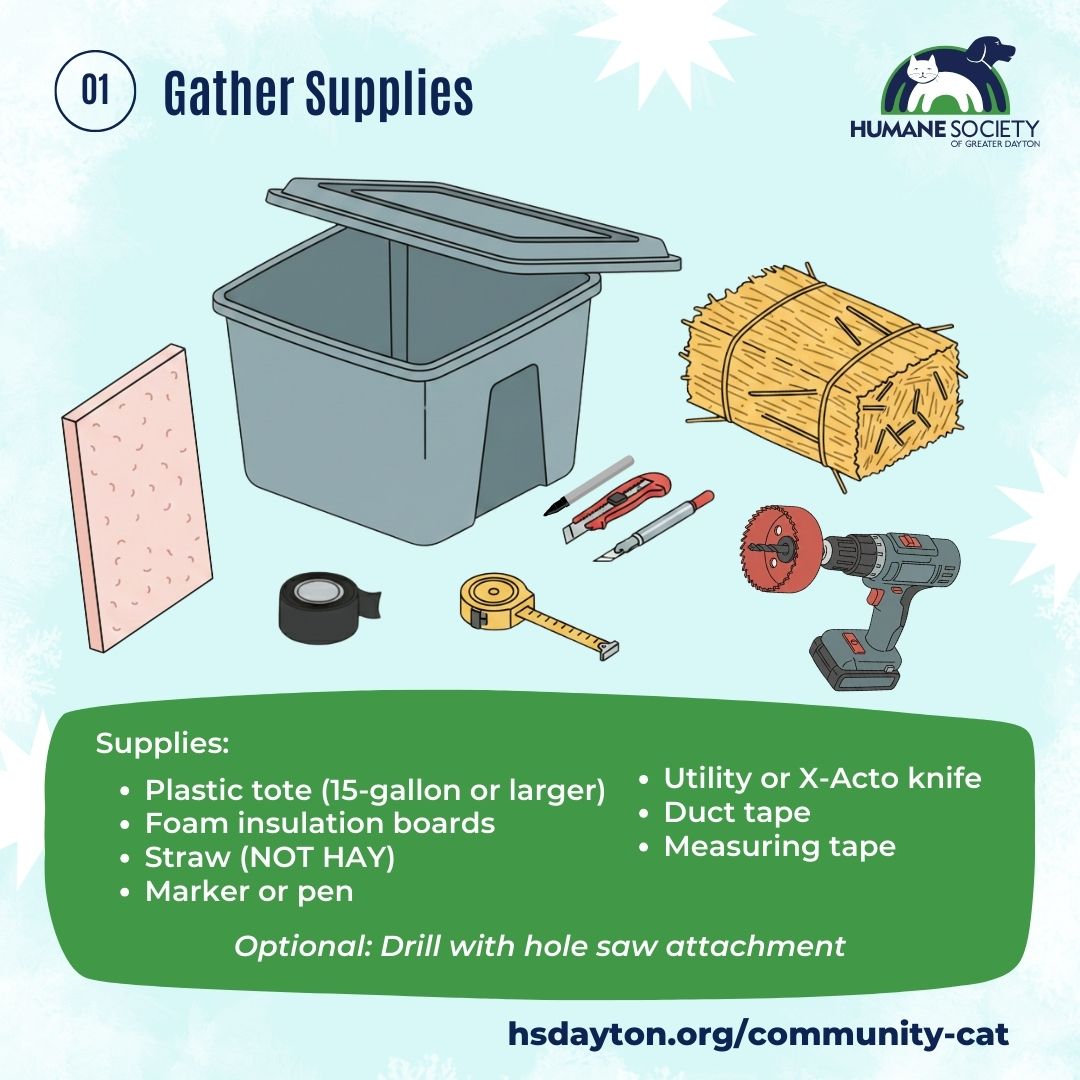
- Gather Your Supplies: You’ll need a 15-gallon (or larger) plastic tote, foam insulation boards, straw, duct tape, and a utility knife.
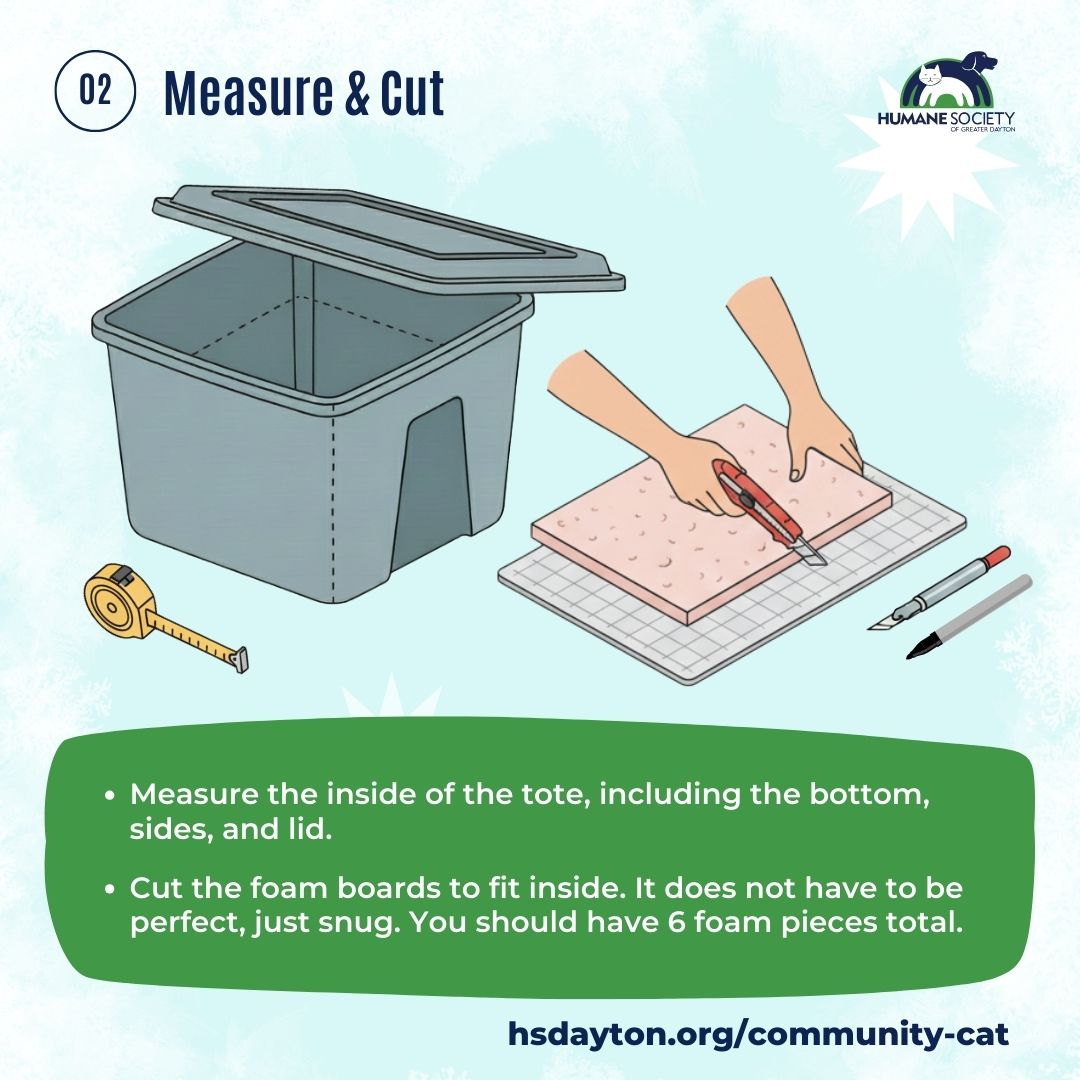
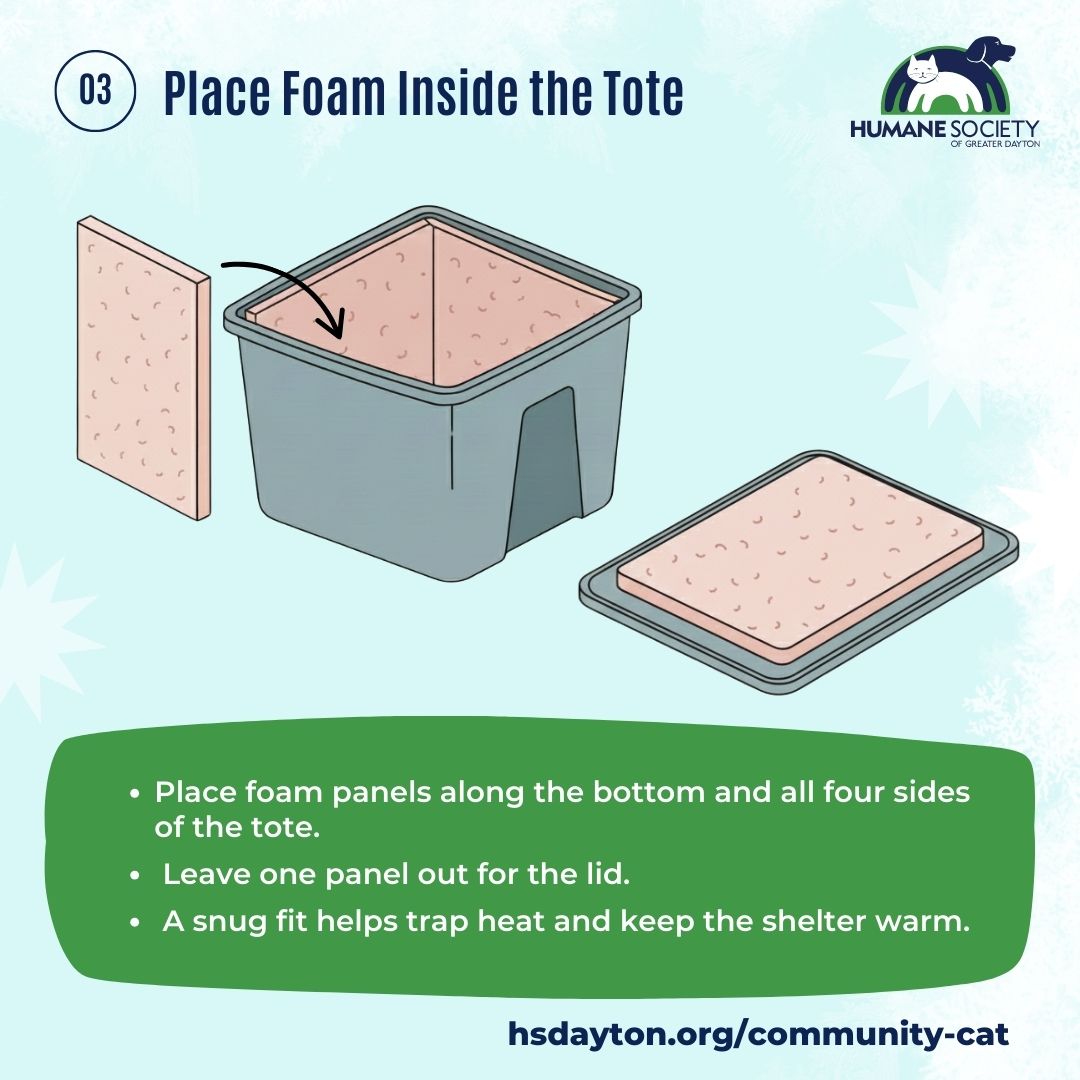
- Insulate for Warmth: Measure and cut foam boards to fit the bottom, all four sides, and the underside of the lid. A snug fit is key to trapping heat!
- Create an Entrance: Use a drill with a hole saw attachment or an X-Acto knife to cut a 6-inch opening. Pro Tip: Cut the hole off-center so the cat has a “wind-block” corner to curl up in.
- Seal for Safety: Use duct tape to cover the sharp edges of the entrance. This protects the cat’s fur and prevents moisture from seeping between the plastic and foam layers.
- Add Bedding: Fill the shelter with about 1.5 “flakes” of straw. Create a small, football-sized indentation in the center to help the cat nestle in.
- Secure the Lid: Snap the lid on and duct tape it shut to ensure it doesn’t fly off during high winds.
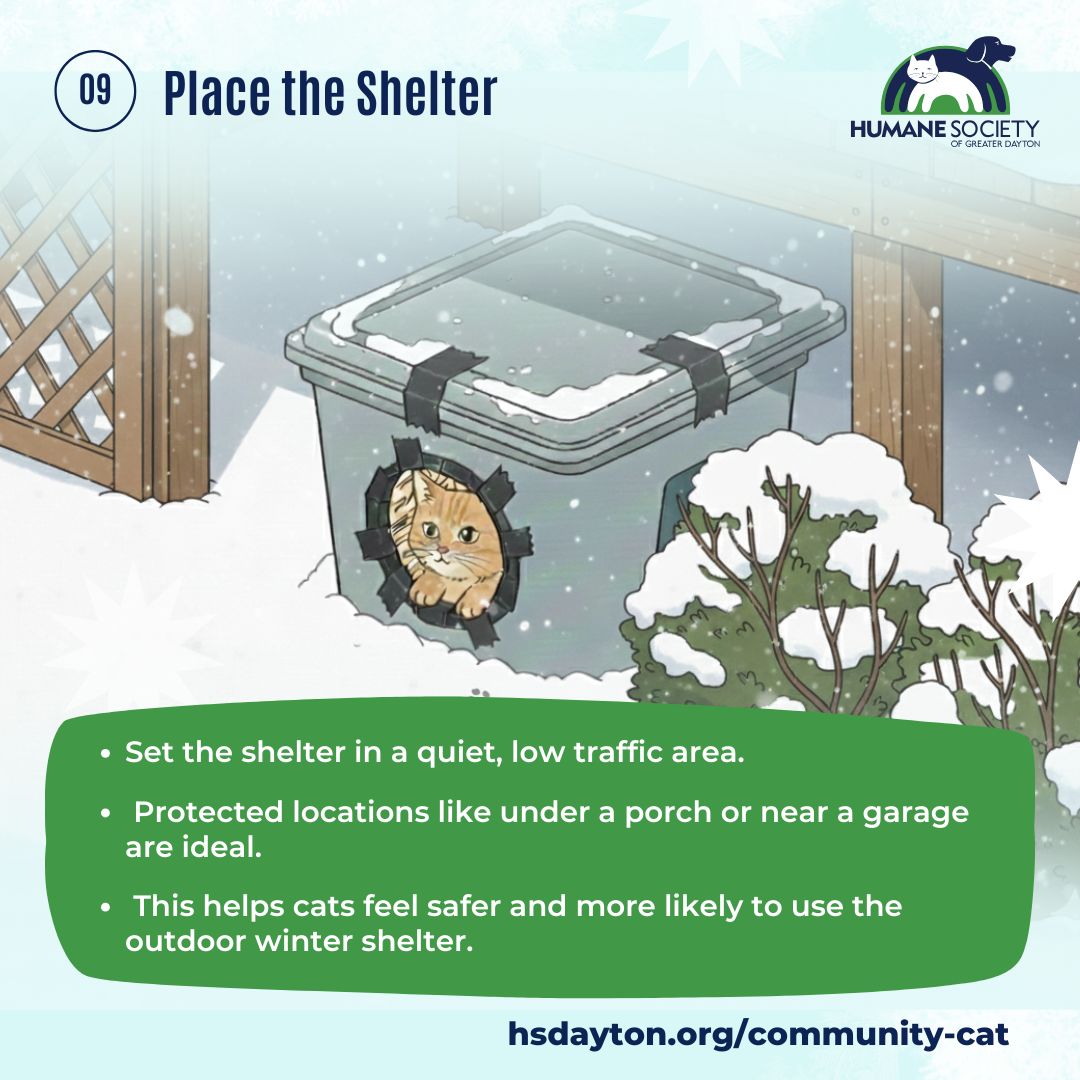
- Strategic Placement: Place the shelter in a quiet, low-traffic area, such as under a porch, near a garage, or against a fence.
Other Ways to Help
Beyond building shelters, you can help our feline neighbors by:
-
Providing extra food (digesting food helps cats stay warm!).
-
Checking water bowls frequently to ensure they haven’t frozen over.
-
Checking under your car hood or tapping on the hood before starting your engine, as cats often seek warmth near car motors.
Want to see exactly how it’s done? Click here to view our Step-by-Step Video!
For more information on helping community cats in our region, click here!
Stay warm, Miami Valley, and thank you for helping us keep our community animals safe!